Using budgeting software is the easiest way to keep track of your home’s finances and ensure you spend less than you make. However, it can be challenging to keep track of all those inputs and outputs, particularly if your cash flow is complex. The Best Prepaid Cards for Budgeting
If you use a reloadable prepaid card to help you budget, it can make your financial life easier, at least when it comes to keeping track of your daily costs and short-term savings. It’s a new take on the old-school idea of envelope budgeting, which means putting a specific amount of cash aside each month to keep your spending in check.
Some prepaid cards are better for keeping track of your money than others. Continue reading to find a list of the best prepaid cards.
Best Prepaid Cards for Budgeting
These are the best prepaid debit cards and credit cards for people who want to take control of their budgets. Each does at least one thing really well, whether it’s empowering parents and kids to work together on shared household expenses or earning a solid, budget-boosting return on everyday spending.
Our top overall pick delivers the best value for users thanks to low fees and unbeatable ease of use.
Best Overall: Bluebird by American Express
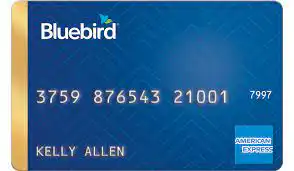
The Bluebird® American Express® Prepaid Debit Account noses past the competition thanks to low fees, impressive ease of use, and lots of value-added features.

Two benefits deserve special mention:
- Free cash reloads at Walmart — Bluebird is one of the few prepaid debit cards with a free cash load option
- No monthly maintenance fees
Other highlights include:
- Free person-to-person (P2P) transfers to other Bluebird cardholders — perfect for shared household budgeting.
- Free ATM access at more than 30,000 MoneyPass ATM network locations
- Get paid up to two days early with direct deposit if your payer qualifies
- No foreign transaction fee
- Free bill pay
- No inactivity fee
- Upgrade to a Bluebird bank account with no monthly fees
Best for Kids and Teens: FamZoo

FamZoo is a fantastic family budgeting app. Relatedly, the company is behind the best debit card for kids and parents — the best solution for adults who want to set their tweens and teens up for financial success in the not-so-distant future.

FamZoo’s selling points for parents and teens include:
- Free direct deposit for teens who work outside the home
- Advanced allowance and chore payment features that incentivize kids to get in-home jobs done on time
- Parent-paid interest — you set the interest rate and eligible balance
- Customizable savings goals and subaccounts
- Real-time spending and transaction alerts
- Card locking and unlocking right in the app
Additional features:
- Track informal family loans and lines of credit in external IOU accounts
- Pay as little as $2.50 per month per household when you prepay the subscription fee
- Use a text-based system in the mobile app to collect money and reimbursement requests from your kids
- Transfer funds instantly from a linked checking account or savings account with no reload fee
Best for Cash Back: Green Dot

Green Dot may be the most comprehensive prepaid card provider on this list. But its top selling point is much more tangible: It offers the best reloadable debit card for cashback rewards.
The best Green Dot card for cashback is the aptly named Green Dot Cash Back Visa Debit Card. It earns 2% cash back on eligible in-person and online purchases.
It gets better. The Green Dot Cash Back Visa Debit Card boasts an interest-bearing savings account that earns 2.00% APY on balances up to $10,000. That’s one of the best rates of return in the prepaid debit card world.
Additional features:

- Three other Green Dot debit cards to choose from — Visa Debit, Pay As You Go Visa Debit, and GO2bank Visa Debit
- Get paid up to two days early with a qualifying private payer
- Get paid up to four days early with a qualifying government payer
- Enjoy free mobile cheque deposit and free online bill pay
- Seamlessly lock and unlock your card
- Get up to $200 in overdraft protection with at least two direct deposits totaling $400 or more within a 35-day period
Best for Day-to-Day Money Management: Serve American Express

Serve American Express is another prepaid debit card option from American Express. With four distinct settings, Serve American Express offers even more customisation than Bluebird, making it an excellent budgeting tool for individuals seeking to closely monitor their spending.
Choose the Serve card that works best for you:
- Free Reloads: Pay no reload fees, transaction fees, or ATM fees at in-network ATMs. Just pay a single monthly fee of $6.95.
- Cash Back: Earn 1% cash back on all eligible transactions and pay a cash reload fee ranging up to $3.95 per load, depending on the location. You won’t incur any transaction fees or in-network ATM fees. The monthly fee is $7.95.
- Free Direct Deposit: Set up a recurring monthly direct deposit of $500 per more to avoid the $6.95 monthly fee. Cash reloads cost up to $3.95 per load, but you won’t pay in-network ATM fees or transaction fees.
- Pay-As-You-Go: This card has no monthly fee but does charge $1 per transaction and $2.25 per ATM withdrawal. You’ll pay up to $3.95 for cash reloads.
Additional features:
- Get paid up to two days early with early direct deposit
- Reload at tens of thousands of CVS, Walmart, and Dollar General locations
- Make free P2P transfers to other Serve card users — ideal for shared household budgeting
- Customise text alerts to receive real-time notifications of transactions, low balances, and other account activity.
- Buy online to avoid the initial load fee.
Best for Investors: Greenlight

Greenlight
It’s a money management tool for families that has strong parental controls and features that teach kids about money. Its debit card for kids is one of the best on the market, just behind FamZoo’s.
But what really sets Greenlight apart are its extra features. And one in particular stands out: an investing platform with very low costs and very low minimums. Here, both parents and kids can put money into a taxable fund. This product combines the practical power of a reloadable debit card with the enchantment of compound interest.
To use the investment platform, you’ll need to switch to the Greenlight + Invest plan. That’s a fantastic deal at $7.98 a month.

More features:
Make a chore list in the app and tie your kids’ allowance to finishing it.
Consider setting up and automating weekly or monthly transfers to eliminate the need for manual deposits.
Get alerts about transactions with vendors and balance information in real time.
Set and change restrictions for how much you can spend and how much you want to save.
You may get identity theft protection, 1% cash back on eligible purchases, 5.00% APY on eligible savings balances, and other useful benefits by upgrading to Greenlight Max for $9.98 a month.
Methodology: How We Select the Best Prepaid Cards for Budgeting
We use several important factors to evaluate the best prepaid cards for household budgeting. Each relates in some way to the card’s flexibility, use cases, or cost.
Recurring Card Fees (Annual Fees or Monthly Fees)
Most prepaid cards have fees. Most charge fees for cash loads and reloads, ATM withdrawals, and other account activities.
Some prepaid cards also charge recurring fees as a condition of use, either annually or monthly. These charges can really add up, eating into any savings you’re able to achieve through sound budgeting or spending-control strategies. All else being equal, we prefer prepaid cards that don’t charge monthly fees or annual fees.
Load Fees
Many reloadable debit cards charge fees to reload with cash, cheque, and sometimes even electronic transfer. It’s less common for prepaid cards to charge for direct deposit loads, but not totally unheard-of.
We prefer cards that keep load fees to a minimum, allow users to avoid them with regular direct deposit, or both.
Card Type
We cover two types of prepaid cards here: credit and debit cards. Reloadable prepaid debit cards are more closely associated with prepaid card budgeting, but don’t count out secured credit cards. The required security deposit is a built-in spending curb.
Both debit and credit cards have upsides and downsides, so we don’t strongly favour one over the other. We do like that secured credit cards help build credit history, though.
Built-in Budgeting Tools on The Best Prepaid Cards for Budgeting
We’re fans of prepaid cards with built-in budgeting and spending management tools. While this feature is not commonly found in “adult” cards, it is a common feature in kid-friendly debit cards and their accompanying apps. That’s why you’ll find multiple debit cards with parental controls on this list.
Parental Controls
If you have no kids or prevent them from using prepaid cards, parental controls are irrelevant. But if you’re using these cards to teach your kids the value of a dollar, you’ll want to be able to track and manage their spending.
That’s why we’re fans of custodial debit cards with built-in parental controls, although we don’t hold the lack of parental controls against cards that don’t advertise themselves as kid-friendly.
Rewards Program of The Best Prepaid Cards for Budgeting
It’s not customary for prepaid cards to earn cashback rewards, but it’s slowly becoming more common. When everything else is equal, we prefer prepaid cards, whether credit or debit, that offer rewards to users.
Interest on Balances
Interest on prepaid card balances isn’t customary either, but you can find it if you know where to look. We’re always on the lookout for interest-bearing cards, and you’ll find our favourites on this list.
Become a Prepaid Card Expert: Your Questions Answered
You have questions about using prepaid debit cards to budget. We have answers.
Does a Prepaid Card Build Credit?
It depends on the type of card. A reloadable prepaid debit card doesn’t build credit, even if it belongs to a major payment network like Visa, Mastercard, or American Express.
A secured credit card does build credit. So if you’re looking to improve your credit score while strengthening your household’s finances with a prepaid card, you know what to do.
Which Prepaid Card Can Hold the Most Money?
No single prepaid card towers above the rest when it comes to the maximum allowable balance or load rate.
That said, a few reloadable prepaid debit cards deserve mention, including the PayPal Prepaid Mastercard and the Netspend Prepaid Visa. Both allow balances above $10,000, making them useful budgeting tools (and direct deposit collectors) for people earning six-figure incomes.
Prepaid credit cards tend not to be so generous. The best secured credit cards’ credit limits top out around $5,000, at which point you’ll need to upgrade to an unsecured credit card or switch to debit.
How Much Does It Cost to Load a Prepaid Debit Card?
It depends on the card and the load method. Cash load fees typically range from $3 to $5 per load, although the initial load is often free. Load fees for electronic transfers may be lower or waived entirely, and direct deposit loads usually don’t cost anything.
What Are the Most Common Prepaid Card Fees?
In no particular order, the most common prepaid card fees include:
- Monthly fees, also known as maintenance fees
- Annual fees, which are more common on prepaid credit cards
- Cash load fees
- Check load fees
- Late payment fees on prepaid credit cards
- Negative balance fees (overdraft fees) on cards that allow overdrafts
- ATM fees charged for ATM withdrawals and loads
- Foreign transaction fees
- Account opening fees
Before opening a prepaid card account, carefully review possible fees and charges. Think about how you’re likely to use the card and which fees you’re likely to incur as a result. Then choose a card that won’t unduly burden you with charges.
How to Choose the Best Prepaid Card for Budgeting
First, decide which type of prepaid card you need. If you want to build credit for yourself or an authorised user, you’ll need a prepaid credit card—a secured one.
If you don’t care about building credit right now or don’t want to consent to a credit check before opening your account, consider a prepaid debit card instead. Next, assess potential card fees by considering the ones you are most likely to encounter. It doesn’t matter if your preferred card charges an ATM withdrawal fee if you never use cash, for example.
Then move on to budgeting capabilities. That’s why you’re here, after all. Look for cards that make it easy to manage day-to-day expenses and control your spending. If you have kids and think they’re ready for their debit cards, you’ll want to limit your search to cards with built-in parental controls, spend tracking, and features that help you manage allowance and chore payments.
You can’t go wrong with any of the cards on this list. But that doesn’t mean you shouldn’t put in the work to find the most fit card for your needs.