Mailchimp Review
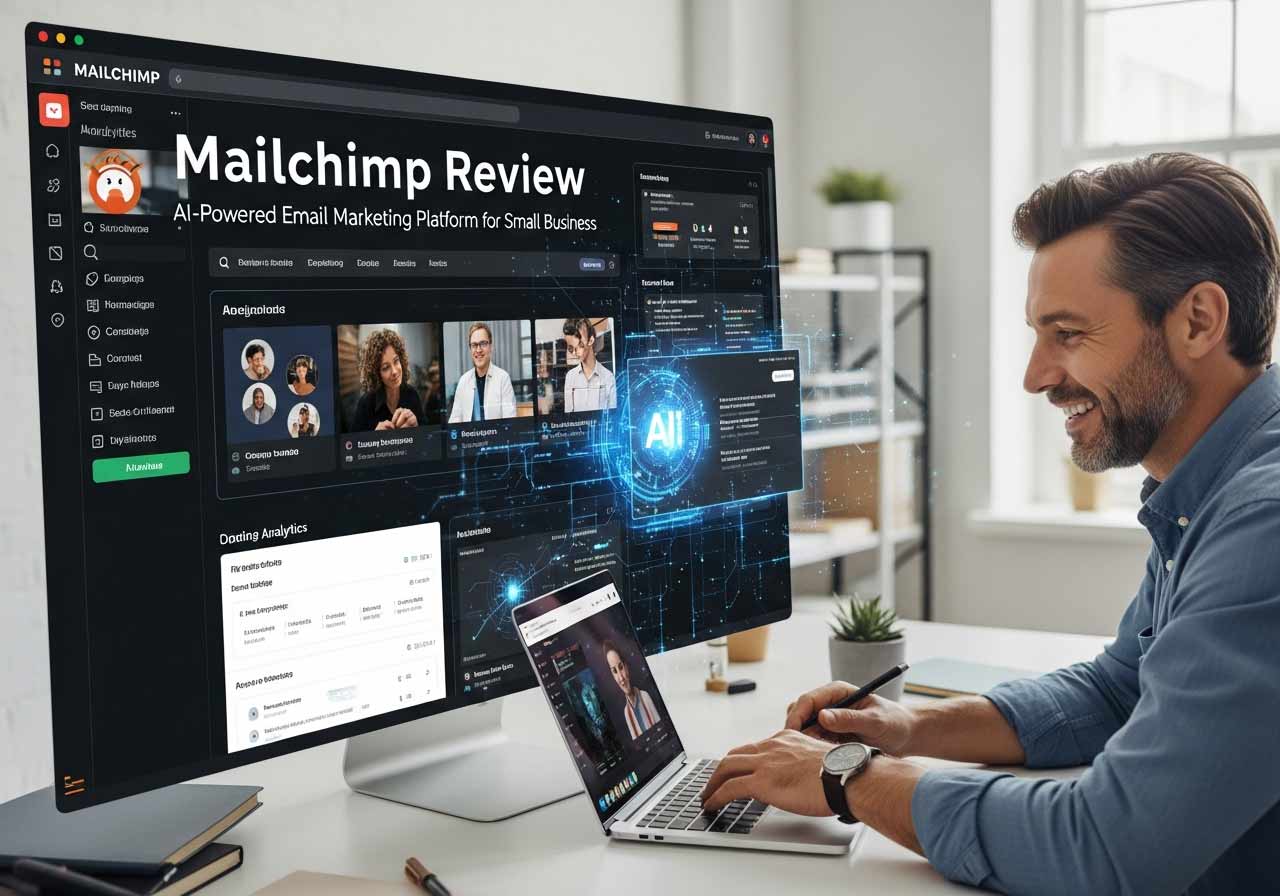
Mailchimp has evolved significantly from its initial status as an email tool featuring a chimp as its emblem. If you haven’t used the platform in a while, you may be surprised by its changes.
Intuit bought Mailchimp in 2021, and since then, the platform has grown into a powerful marketing tool that does a lot more than it should. AI that crafts your emails for you, predictive analytics that find the people most likely to purchase, and automation that makes 9 times as much money as doing one-time ads by hand are all examples of what we’re talking about.
What truly transforms the landscape? You don’t need a degree in marketing to use any of it. Enterprise-level companies spend six figures on marketing automation tools and pay people to administer them. Small company owners may now get comparable features for as low as $20 a month. Mailchimp’s new capabilities make things fairer for everyone, whether you have an online shop, a consultancy firm, or a service-based business. Such an arrangement wasn’t conceivable only two years ago.
Getting Access to funds when you need it just got easier
Get $5,000 Venmo Transfer Click Here
Get Instant $10,000 Zelle Transfer Click Here
Get $10,000 USD Cashapp Transfer Click Here
Key Features on Mailchimp Review
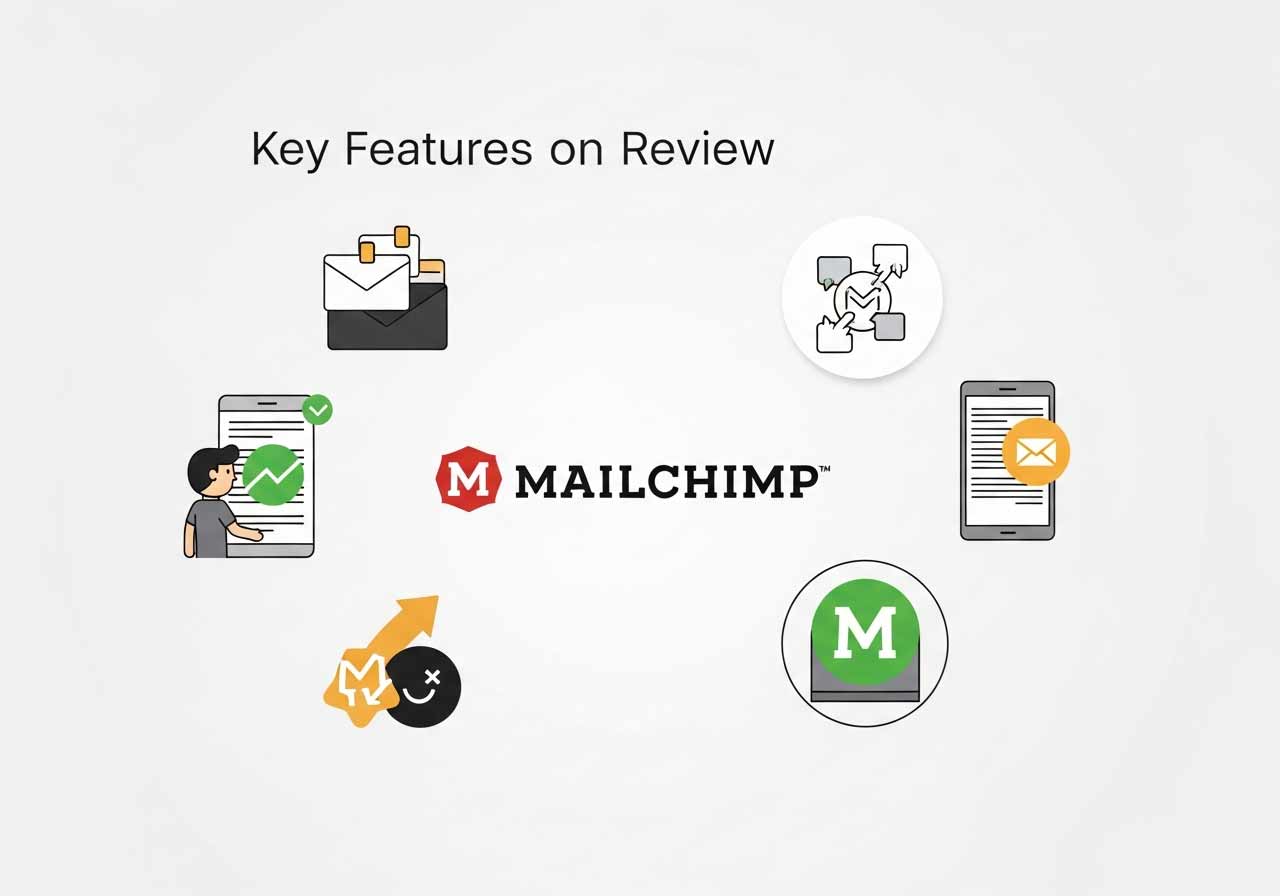
Built around accessibility for non-marketers while offering sophisticated tools for experienced users, Mailchimp provides four plans scaling from hobbyists to enterprise operations.
Plans and Pricing
All paid plans include a 30-day free trial.
- Free ($0/month): Up to 500 contacts and 1,000 monthly email sends, with basic features and Mailchimp branding on emails.
- Essentials ($13/month): The Essentials plan, which starts at $13 monthly for 500 contacts, scales to $45/month for 2,500 contacts and supports up to 50,000 contacts. The Essentials plan eliminates branding, incorporates a 10x send limit, offers A/B testing, and provides round-the-clock support.
- Standard ($20/month): The standard plan starts at $20 per month for 500 contacts, increases to about $60 per month for 2,500 contacts, and scales up to 100,000 contacts. Includes a 12x send cap, advanced segmentation, marketing automation flows, predictive analytics delivering 2x more revenue, and enhanced reporting.
- Premium ($350/month): Starts at $350 monthly for 10,000 contacts, supporting up to 200,000 contacts. Features a 15x send cap, unlimited users, priority phone support, and dedicated onboarding.
Revolutionary AI and Automation on Mailchimp Review

Mailchimp’s current AI features significantly impact how firms create marketing materials. The AI content generator generates captivating email text based on your company description and campaign objectives. This feature cuts down on the time it takes to write emails by a lot. The technology learns how your brand sounds and changes its recommendations based on that.
Mailchimp’s statistics from January 2023 to January 2025 show that marketing automation flows make 9 times more money than one-time campaigns. Users may choose from pre-made sequences for typical situations like recovering abandoned carts, welcome series, or re-engagement campaigns. They can then add conditional logic and branching routes to these sequences to make them their own. Automated marketing brings in 8 times as many orders as manual mail, according to businesses.
The platform now lets you target users based on their apps, websites, or shopping habits. New segment conditions allow Shopify users to keep track of goods visited, things added to the cart, and search queries made. This feature lets you run highly personalised campaigns that react to what customers want right away.
Enhanced E-Commerce Integration
The deeper Shopify connection gets more information, such as browsing history, when people leave their carts, and how often they buy things. This gives predictive segments the information they need to find consumers who are most likely to buy again.

Explore new paths and unlock greater financial opportunities
Get $50,000 Venmo Transfer Click here
$10,000 Western Union Transfer Click here
Get $500,000 Bank Account Transfer Click Here
Businesses may run omnichannel campaigns that reach clients by email and text without overlapping when they use SMS marketing. In certain areas, you may add SMS for around $20 for every 25,000 texts. When email and SMS are used together, users say their click rates are 97% greater than when email is used alone.
Reporting and Attribution
Enhanced analytics provide clarity on what drives revenue. Improved attribution tracking shows which channels and messages lead to conversions, with customisable attribution windows. Revenue attribution now includes email opens and SMS delivery interactions for a complete performance picture.
Conversion insights identify where customers drop off in the buying journey, while audience analytics reveal where new customers originate, letting you focus spending on successful channels.
Email Builder and Design Tools
The New Builder offers improved functionality with mobile display controls, letting you choose whether columns stack or retain desktop layouts. A drag bar adjusts column widths freely, while built-in stock images eliminate separate design tools. Popup forms capture visitor information for email and SMS lists with automatic tagging for immediate segmentation.

Advantages
- Best-in-Class User Experience
Mailchimp’s interface remains unmatched for intuitiveness. The drag-and-drop editor makes email creation accessible to beginners, while power users appreciate custom HTML templates and API access. - AI That Actually Saves Time
Mailchimp’s content generation delivers tangible time savings. The system understands marketing best practices and creates emails that convert, not just generic filler text. - Powerful E-Commerce Capabilities
The Shopify integration alone justifies the platform for online retailers. Automated abandonment cart sequences, product recommendations, and post-purchase follow-ups maximise customer lifetime value. Standard plan users see a 24x return on investment, according to Mailchimp’s data. - Comprehensive Ecosystem
With 750+ third-party integrations, Mailchimp connects to virtually every business tool, including Salesforce, WordPress, and most payment processors.
Disadvantages
- Pricing Escalation
While the free plan provides a genuine on-ramp, costs climb steeply as contact lists grow. A business with 10,000 contacts pays approximately $150/month for Standard or $350/month for Premium. The pricing model penalises businesses with large but less-engaged lists, as you pay for total contacts stored, not just active subscribers. - Feature Limitations by Tier
Critical capabilities remain locked behind higher tiers. Predictive segmentation requires Standard or Premium. Phone support or more than five users? Premium only. The Essentials plan offers barely more functionality than the free tier, despite its monthly costs. - List Management Friction
Siloed audiences create complications. Contacts with multiple audiences count multiple times towards your limit and billing, effectively multiplying costs if you organise subscribers differently. - Learning Curve for Advanced Features
While basic email sending is straightforward, mastering automation workflows and segmentation requires significant learning investment. Many users report needing weeks or months to fully leverage advanced capabilities.
Conclusion on Mailchimp Review
Mailchimp is the best choice for that want to make email marketing easy without having to become experts at it. The AI capabilities really do save time and help campaigns work better, and the better Shopify connection makes it almost necessary for online stores.
The free plan is a real solution for entrepreneurs to start email marketing without having to spend any money. The Standard Plan gives organisations with fewer than 10,000 contacts enterprise-level features at mid-market prices. Automation makes 9 times as much money as one-time campaigns.
Unlock your potential and step into the next level of wealth
Get $5,000 Venmo Transfer Click Here
Get Instant $10,000 Zelle Transfer Click Here
Get $10,000 USD Cashapp Transfer Click Here
Mailchimp is still the best solution for service-based companies, e-commerce shops, consultants, and small- to medium-sized merchants that want sophisticated email marketing without employing an expert. The money you save on membership fees is usually worth it in the first few months because of the time and money you save on AI content development and automated promotions.