
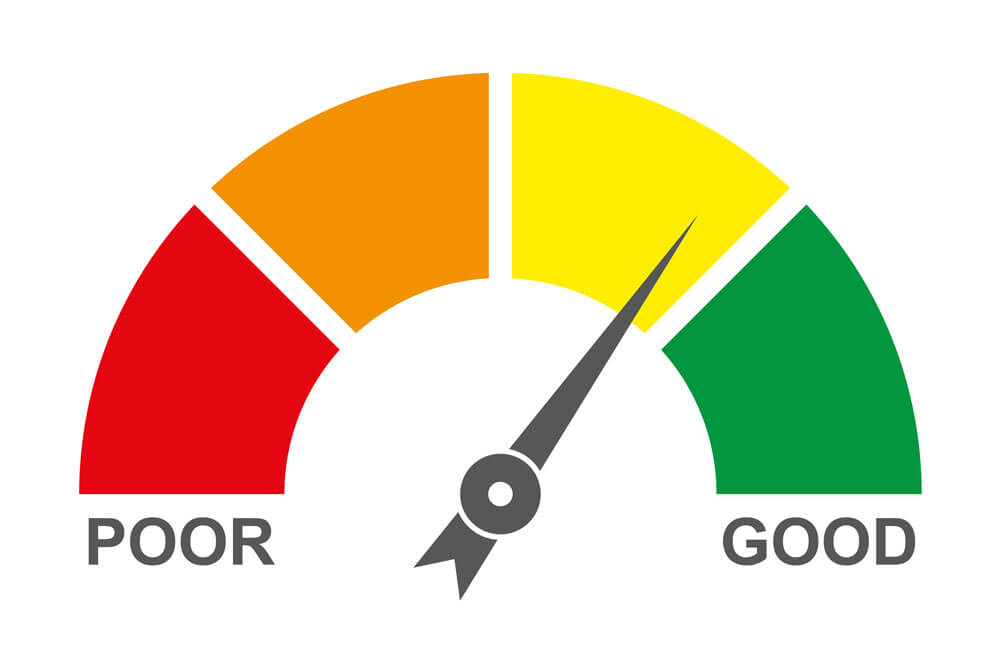
Whenever you apply for a loan or line of credit in the U.S., the lender almost certainly pulls your credit report. And before they look at anything else on that report, they look at your score. What Is a FICO Score, and Why Is It Important?
While not the only type of credit score, scores are by far the most commonly used. As you aim to improve your credit, it helps to understand exactly how FICO scores work — and how to boost yours.
What Is a Score?
When someone refers to your credit score, they almost always mean your FICO score.
In 1989, the three major credit bureaus — Equifax, Experian, and TransUnion — hired the Fair Isaac Corporation to develop an algorithm to uniformly and consistently generate scores. Each credit bureau requested slightly different algorithm models, so each bureau calculates a slightly different score even if they have the same data on you. Which they don’t: different creditors sometimes report to different bureaus, so each credit bureau uses not only different scoring models, but different input data.
Those original algorithms have gone through many iterations since, the most recent of which is 10. Even so, lenders choose which version they want to use, and many use older scoring models. For example, mortgage lenders typically use Experian’s FICO Score 2, TransUnion’s FICO Score 4, and Equifax’s FICO Score 5.
Despite small differences between them, these scoring models all include similar data to calculate credit scores. They also use the same numeric range for those scores.
FICO Score Ranges
Technically, credit scores range from 300 to 850, although it’s rare to find scores below 500.
Here’s a rough guide to what constitutes a good credit score:
- Below 600: Terrible credit. Expect difficulty finding a home to rent or qualifying for loans of any kind.
- 600-649: Bad credit. While you have more rental and financing options available to you, you can still expect high interest and fees. Many loan programmes remain closed to you.
- 650-699: Fair credit. You can access most types of credit, but at higher interest and fees than your peers with better credit scores.
- 700-749: Good credit. Expect reasonable interest rates and moderate fees, with fewer limitations.
- 750-799: Excellent credit. Lenders actively court you, offering competitive rates and generous loan terms.
- Above 800: Functionally perfect credit. All credit doors open to you, and you can negotiate the lowest fees and interest rates on the market.
If your credit clocks in below 700, invest some time to start improving your score.

Explore new paths and unlock greater financial opportunities
Get $50,000 Venmo Transfer Click here
$10,000 Western Union Transfer Click here
Get $500,000 Bank Account Transfer Click Here
How Your Score Is Calculated
The credit bureaus include many factors in their scoring algorithms. But as a general rule, score calculations break down as follows.
- Payment History: The largest factor in your score, paying your bills on time (or not) can improve or destroy your credit score. Payment history makes up 35% of your credit score.
- Credit Utilisation: The credit bureaus calculate the percentage of your available credit that you use. For example, if your credit card limit is $1,000, and you carry a balance of $200, that’s a 20% credit utilization ratio. This makes up 30% of your score.
- Length of Credit History: The longer your credit accounts have been open, the better. The credit bureaus take the average age of your accounts, and this makes up 15% of your score.
- Credit Mix: Credit bureaus like to see more than one type of credit account. For example, they like a mix of installment loans (such as car loans), rotating credit (like credit cards), and perhaps a mortgage loan. The diversity of your credit makes up 10% of your score.
- New Credit Applications: When you apply for new loans or credit lines, if the lender pulls a “hard inquiry” it dings your credit score for up to six months. New credit applications — or ideally the lack of them — make up 10% of your score.
In other words, follow a few simple rules to boost your credit score:
- Pay your bills on time every month.
- Pay off your credit cards in full each month.
- Leave older credit cards open even if you don’t use them anymore.
- Choose a lender before you let them do a hard credit pull and provide your own credit report for price quotes while shopping around
Why Is Your Score Important?
Lenders base their decisions on risk — specifically, the risk of the borrower disappearing with their money. The higher they perceive a given loan’s risk, the more they charge for it.
And at a certain degree of risk, they stop lending altogether.
The three credit bureaus and Fair Isaac Corporation designed their algorithms to measure consumers’ reliability and the risk associated with lending to them. Someone with an 820 credit score has repeatedly proven their reliability and trustworthiness. They always pay their debts, on time and in full, regardless of the type of debt of the circumstances.
If you want access to credit, such as mortgage loans, auto loans, low-APR credit cards, or student loans, your credit score matters. Lenders will look at your credit score when you apply to determine how risky you are as a borrower. People with bad credit have fewer borrowing options, and those they do have are expensive.
Unlock your potential and step into the next level of wealth
Get $5,000 Venmo Transfer Click Here
Get Instant $10,000 Zelle Transfer Click Here
Get $10,000 USD Cashapp Transfer Click Here
So if you want cheap loans — or any loans at all, for that matter — keep an eye on your credit score.
FICO vs. Other Credit Scores
While credit scores are the industry standard for most lenders, they’re not the only scoring model on the market.
The three major credit bureaus again pooled their resources in 2006 to create an alternative scoring model called VantageScore. It uses the same 300 to 850 scoring range and similar criteria, although it merges data from all three credit bureaus to generate a single score.
Unlike scores, VantageScores don’t require a minimum of six months’ credit activity to generate a score. According to VantageScore, that means 37 million more consumers have a VantageScore than “other credit scoring models,” by which they mean .
There’s some nuance to the differences between VantageScores and scores. However, both are driven by the same general financial behaviours. That means small changes on your part can improve or damage both credit ratings.
How to Check Your Score
Every year, you’re entitled to one free credit report from each of the three major credit bureaus at AnnualCreditReport.com. Spacing these three reports throughout the year—one every four months or so — is a great way to check for errors that hurt your score without paying for a credit monitoring service like my.
But these free copies of your credit report don’t actually include your credit score. Fortunately, you do have several other free options for both checking your score and monitoring your credit.
Unlock your potential and step into the next level of wealth
Get $5k USD Western union Transfer Hack
Get $100k USD Venmo Transfer
Get $100k USD Zelle Transfer Hack

Discover smarter ways to grow and elevate your financial future
Get $20,000 PayPal Transfer Click Here
Get $50,000 Cashapp Transfer Click Here
Get $100,000 Bank Account Transfer Here
For example, you can use a budgeting app to track your net worth and credit score. You can also use Credit Karma’s free credit monitoring service to keep track of your credit score. Just beware that these types of free services serve ads and promote affiliate products to keep the lights on.
FICO Score FAQs
Still have questions about how scores work?
Most consumers have only a vague or incomplete understanding of scores. Here are a few common questions about them.
Is a Score the Same as a Credit Score?
Technically, a FICO score is only one type of credit score. But the overwhelming majority of lenders use FICO scores as their credit score of choice, so for most practical purposes, you can use the terms “ score” and “credit score” interchangeably.
What Is a Good Score?
While it depends who you ask, many people consider credit scores over 700 to be “good”. Some draw the line at 680; others might draw it at 720. In this context, “good” is subjective, so take the answer with a grain of salt.
Each credit bureau calculates a different FICO score for you, based on the data they have and their own unique scoring algorithm. So you can expect different scores from TransUnion, Experian, and Equifax.

Step forward and unlock powerful financial opportunities
Get $20k USD Western union Transfer Click here
Get $5k USD Zelle Transfer Hack Click here
Get $1m USD Money Transfer Click here
Further, offers many different scoring algorithms. The latest of these is 10, but many lenders use older scoring models. Others use industry-specific scores, such as the Auto Score 8 for car loans.
You can also expect your VantageScore to differ from your scores. It combines data from all three credit bureaus and uses a different algorithm to generate a single score.
Final Word
Unless you buy everything with cash, including homes and cars, your credit score impacts your life more than you realise.
Imagine you have $10,000 as a down payment and $1,300 per month to put toward principal and interest on a mortgage loan. At an 800 credit score, you might qualify for a 3% down payment and a 3% interest rate on your mortgage loan. You could therefore buy a $310,000 house.
Or instead imagine you have a 550 credit score. You manage to qualify for an FHA loan with a 10% down payment and a 5.5% interest rate. The down payment alone restricts you to a $100,000 home purchase. Even if you bumped your score to 580 and qualified for a 3.5% down payment, you’d still only be able to afford a house worth about $230,000.
Your credit score matters. Keep an eye on it, fix any errors and otherwise improve your credit, and watch as more doors suddenly open up to you in ways you didn’t expect.