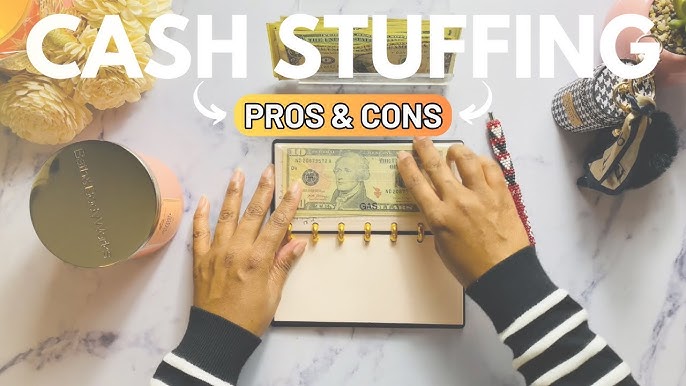
So you’ve been working on making a budget and have been carefully recording all of your income and expenses. But every month, the same thing happens: you keep spending too much. Envelope Budgeting System – How It Works, Pros & Cons
It’s wonderful that you’re trying to make and stick to a budget, but there’s probably nothing that will actually hold you to it. If you do well, you receive no reward; if you do poorly, you avoid trouble.
So, how can you make your budget work for you and make sure you stick to it? Use the envelope method to budget.

Getting Access to funds when you need it just got easier
Get $5,000 Venmo Transfer Click Here
Get Instant $10,000 Zelle Transfer Click Here
Get $10,000 USD Cashapp Transfer Click Here
Envelope Budgeting System – How It Works
The envelope budgeting system is very tangible. When you run out of cash, you stop spending. Here is the procedure for how it works:
1. Determine Your Discretionary Income
Before you start the envelope system, determine how much you have available after you pay your bills and put money aside for savings and investments.
2. Decide on a Budget
Once you know how much money you have left, decide how to divide it among the different budget categories in which your monthly spending varies. Some examples of common categories include: groceries, household items, entertainment or dining out, clothing, gifts, gas, and allowance (to be spent as fun money).
Tip: Check your bank statements to see how much you’ve spent in these areas.
3. Create Envelopes and Stuff Them with Cash
Get an envelope for each category and write the category’s name on the front. Then, after each pay cheque, put in the budgeted amount of cash.
4. Spend Cash Only
When you run out of cash in an envelope, you can’t spend any more in that category until the next pay period.

Explore new paths and unlock greater financial opportunities
Get $50,000 Venmo Transfer Click here
$10,000 Western Union Transfer Click here
Get $500,000 Bank Account Transfer Click Here
5. Pay Off Debt with Extra Money or Save It
If you have any debt, use the money left over from your envelopes to pay it off. If you do not have any debt, put your extra cash into a high-yield savings account.
Advantages
- It Works! The best part about the envelope budgeting system is that it simply works. If you are only paying for things using cash, and you run out of cash, you cannot possibly overspend. The envelope system has been around for a long time for good reason.
- It Will Help Discipline You. We all need discipline in our lives to make us better people, whether it is with our spending habits, our eating habits, or our productivity at work. The more you practise being disciplined, the easier it is to take responsibility for other life areas you want to improve.
- It Can Be Used as an Emergency Fund. Instead of carrying cash, many people carry plastic, which can be a problem if an emergency arises. Though the money in the envelope system is not intended for emergencies, you can always use it for one – like if your car breaks down in the middle of nowhere and you need to pay for a tow or a ride back home.
- Your Budget Becomes Tangible. The concept of money is much more tangible if you use cash instead of plastic. Credit cards can easily cause you to overspend. When you use envelope cash, it serves as a constant reminder of your budget.
- No Overdraft Charges. Have you ever been charged an overdraft fee from your bank? If you put away your debit card and use cash instead, you are much less likely to overdraft and get charged the absurd fee.
- Less Wasteful Spending. When I used an Excel spreadsheet to create my budget, I would look back at the end of the month and be surprised to see what I wasted my money on. However, when you use the envelope budgeting system, you are more likely to think through every purchase. When you witness the money disappearing before your eyes, you are less likely to spend wastefully. In fact, people spend 10% to 15% less when using cash.
- You Won’t Miss a Payment. When using the envelope budgeting system, you pay upfront, and there is nothing you need to keep track of. But if you use a budgeting app, it’s easy to forget to enter purchases. I believe the budget I kept electronically was off by hundreds of dollars each month due to the fact that I lost receipts on a regular basis.
Disadvantages
- It’s Tough to Get the Whole Family on Board. Some people are adamantly against using cash. They like the simplicity and ease of using plastic, and who can blame them? However, for the envelope budgeting system to succeed, the entire family must fully commit to its implementation. Otherwise, it won’t.
- You Must Go to a Bank or ATM to Withdraw Cash. I really try to avoid going to the bank or the ATM. It is just another errand I have to run in my already busy life as a stay-at-home mom. But if you use the envelope budgeting system, you’ll obviously have to get cash from somewhere to stuff your envelopes.
- Getting Started Can Be Confusing. I know that the process I described sounds pretty straightforward, but you will eventually come across situations that can be confusing. For example, if you make a purchase at Target and buy $20 worth of groceries, $20 worth of clothing, and $20 worth of house decor, where do you get the cash from? You will probably need to get it from three different envelopes. You’ll experience a learning curve as you figure out how to stick to your categories.
- You Won’t Get Credit Card Rewards. Before I used the envelope budgeting system, I would rack in enough points to earn $250 a year with the best cashback credit cards. But with the envelope budgeting system, you forego credit card rewards because you won’t be using your credit card as much or even at all.
More Tips for the Envelope Budgeting System
1. Pick Categories You Have the Most Trouble With
My husband and I used to have an envelope for clothing. But after six months of not using any cash from that envelope, we decided it was wasteful to budget money to that category. Instead, we spend more money on household goods, and if we ever decide to buy new clothes, they can come out of that category. There is no need for an envelope category that you do not overspend in.
2. Use a Small Accordion Folder Instead of Envelopes
A good friend of mine made this suggestion. She recommends accordion folders because instead of having seven different envelopes to keep track of, she only has one. Her accordion folder is envelope size, so it is perfect for keeping cash. It is also more durable than paper envelopes.
3. Only Take the Cash You Need
If you have budgeted $100 for eating out this month and go to a work lunch, don’t bring all $100. Instead, take what you need from the envelope at home and put it in your wallet. This is especially helpful when you have multiple people using the same main envelopes.
4. Budget by Pay cheque
There are several different ways you can set up your budget: by week, by month, by quarter, and by pay cheque. I recommend doing it by pay cheque because you can accurately plan your budget according to the timing of your pay cheque and bills.
5. Adjust Your System as Necessary
It may take a while to get everything set up correctly. You may go through a dozen pay periods before you get your budgeting amounts and categories just right. Definitely make adjustments. Nothing is set in stone until you decide you are comfortable with the programme.
Unlock your potential and step into the next level of wealth
Get $5,000 Venmo Transfer Click Here
Get Instant $10,000 Zelle Transfer Click Here
Get $10,000 USD Cashapp Transfer Click Here
6. Reduce Your Bills
By reducing your bills, you significantly increase your discretionary income. Consider strategies like finding a cheaper cell phone plan, like one from Ting, or getting rid of cable TV. Reducing your bills provides more cash for your envelopes. If you need help lowering some of your expenses, look at Billshark.
7. Decide the Rules Beforehand
My husband and I argued about borrowing from other categories if we ran out of cash in one. This decision is up to each person or family who uses the system. However, I recommend determining the ground rules before starting to avoid possible confusion. Through trial and error, we eventually decided to combine categories that we commonly borrowed from, such as expenses for groceries and household supplies, to simplify our budgeting process. Remember, it’s fine to adjust as necessary.
8. Use Extra Money to Pay Down Debt
If you do have extra money at the end of your budgeting cycle, use it to pay off debt. If you are debt free, I recommend either investing that money or saving it. I save extra money for the purchase of a van since it is an upcoming expense that we want to pay cash for.
9. Stick with It
It takes time to get disciplined and budget your envelopes. Have some patience because if you do, the envelope budgeting system will not fail you.
Final Word on Envelope Budgeting System – How It Works, Pros & Cons
So, how can you make your budget work for you and make sure you stick to it? Use the envelope method to budget.
In the electronic era in which we live, it might seem archaic to carry around paper envelopes of cash. However, don’t consider it outdated. What’s most important is that it works. As long as you stick to the rules and put away the plastic, it will work. After all, if you are out of cash and don’t use plastic, you can’t overspend.
If you do want to utilize more technology, check out Mvelopes, an award-winning online spending management tool that’s based on the traditional envelope method of budgeting.

Discover smarter ways to grow and elevate your financial future
Get $20,000 PayPal Transfer Click Here
Get $50,000 Cashapp Transfer Click Here
Get $100,000 Bank Account Transfer Here
Unlock your potential and step into the next level of wealth
Get $5k USD Western union Transfer Hack
Get $100k USD Venmo Transfer
Get $100k USD Zelle Transfer Hack
Have you ever used the envelope budgeting system? How did it work for you?