
Hedge funds have become a popular topic among investors and traders in recent times. The increase in public attention started in early 2021, when retail investors on a Reddit channel known as WallStreetBets outlined morally questionable actions made by hedge funds and worked together to strike back through what became known as the Big Short Squeeze (or the GameStop Short Squeeze, after the most heavily affected stock). 16 Largest Hedge Funds
These events led to a widespread search for knowledge among the investing community. Could you please explain what hedge funds are and clarify the concept of an institutional investor? What is the multistrategy alternative investment approach in which heavy short positions and other derivatives factor into the risk-versus-reward equation?
Could you please tell me who these influential hedge fund managers are that have the ability to impact markets? Read on to find out.
Largest Hedge Fund Managers of 16 Largest Hedge Funds
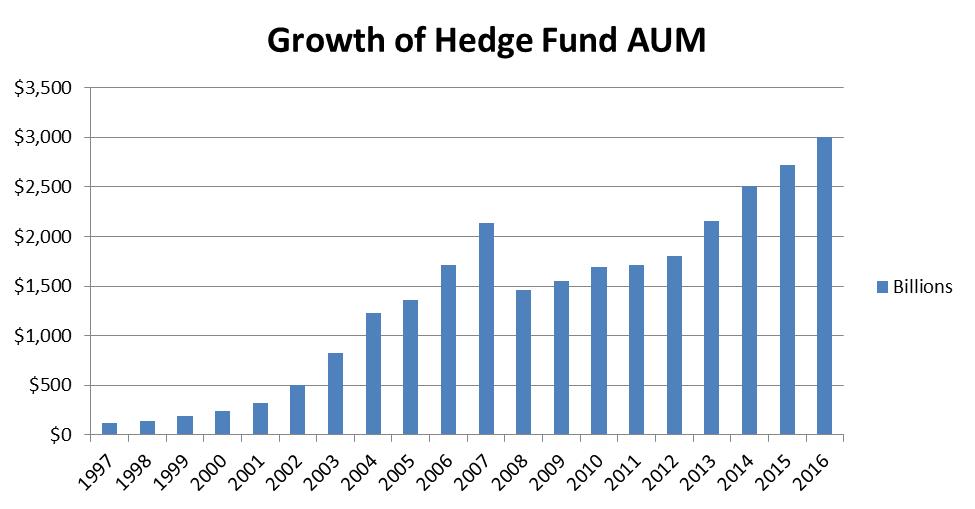
Hedge funds are measured in terms of assets under management (AUM). This term refers to the entire amount of money the fund has collected from investors. Funds with a higher AUM are more popular than funds with lower total investment dollars to work with, representing a sign of strength.
After all, the stock market is a battle between the bears and the bulls, where cash is king and supply and demand is law. Funds with more money can sway investor opinion and tip the scales of supply and demand.
Here’s a list of the largest hedge fund managers in the United States.

1. BlackRock of 16 Largest Hedge Funds
BlackRock is a well-respected giant in the world of hedge funds, often talked about in the world’s leading financial media, and founded by moguls including Larry Fink, Susan Wagner, Robert S. Kapito, and others.
The hedge fund firm has grown to become so large that its assets under management can’t be measured in billions; it has about $8.5 trillion in assets on its books and is expected to top $15 trillion AUM by 2028.
The firm was originally founded as a risk management and fixed-income institutional asset management firm, but with massive success in financial markets, it grew to become the world’s largest fund manager.
Much of BlackRock’s assets are in traditional funds rather than hedge funds. While the company manages a long list of hedge funds, it also offers a wide range of index funds and passively managed investing portfolios for the general public, which has helped the firm amass such a high AUM.
2. AQR Capital Management of 16 Largest Hedge Funds
Cliff Asness, David Kabiller, John Liew, and Robert Krail, all highly regarded experts in financial markets, founded AQR Capital Management. The firm has been around since 1998 and serves institutional investors, financial advisors, and high net worth individuals from its main offices in Greenwich, Connecticut.
With more than $100 billion in assets under management in its hedge funds, the firm may only be a couple decades old, but it has grown to epic proportions. The firm’s total AUM is even bigger.
AQR invests fund assets in various ways, including traditional securities and derivatives. Like several other hedge fund managers, the firm is known for taking a quantitative or systematic approach to investing, a process that requires detailed mathematics and data analytics.
3. Bridgewater Associates of 16 Largest Hedge Funds
Established in 1975 by billionaire investor Ray Dalio, Bridgewater Associates has emerged as a formidable entity, accumulating over $125 billion in assets under management.
However, most retail investors don’t associate Dalio and his fund management firm with hedge funds, a reputation that some in the investing community hold negatively. 16 Largest Hedge Funds

Instead, Dalio and Bridgewater are celebrities of sorts, with Bridgewater once being named one of the five most important private companies in the United States by Fortune magazine and Dalio being nicknamed “the Steve Jobs of Investing” by ai-CIO.com.
Although Bridgewater does take part in short sales—once making $14 billion in a short selling frenzy on European stocks— it makes its decisions from a macro perspective. That means the firm makes its investments based on the state of global economies, rather than picking individual stocks. Dalio and his firm make bets on the market as a whole, following investment strategies he created known as Pure Alpha and All Weather.
According to Attic Capital, Bridgewater Associates generates about 11.5% yearly returns. However, this is subject to change over longer periods of time. 16 Largest Hedge Funds
4. Renaissance Technologies
Founded by Howard L. Morgan and Jim Simons in 1982, Renaissance Technologies is a massive firm, managing more than $106 billion in client assets. Located in Long Island, New York, the firm employs 200 to 400 people at any given time. The majority of the staff is responsible for investment advisory functions.
According to Benzinga, the fund is one of the most successful—and secretive—in the world. It points to the Renaissance Medallion fund as one of the most profitable and closely guarded secrets on Wall Street today.
As its name suggests, Renaissance Technologies, often abbreviated RenTec, focuses its efforts on building a technological advantage in the market through the use of complex mathematics and data science.
While it’s well-known that maths and data science form the technical approach the firm follows, there’s not much known about the exact investment strategies it employs. After all, the Medallion fund is invite-only and generally only available as an investment option to the company’s employees. 16 Largest Hedge Funds


According to Institutional Investor, the firm’s medallion fund has consistently generated annualised returns of around 66%. However, sustaining this level of performance over the long term is unlikely.
5. Elliott Asset Management
Elliott Asset Management, also known simply as Elliott Management, was founded in 1977 by Paul Singer and quickly became a leading management firm on Wall Street, controlling more than $55 billion in its portfolio.
Singer is known as an activist investor who purchases large stakes in publicly traded companies that need a push in a new direction. Once they take a substantial stake, Singer and his fund use their large holdings to force the companies they’ve invested in to make moves following their vision of a better reality for investors.
Indeed, distressed securities, representing companies or governments facing financial hardship, account for more than one-third of the fund manager’s portfolio.
6. Two Sigma Investments of 16 Largest Hedge Funds
Two Sigma Investments has about 20 years of experience providing services to institutional and high net worth investors. Although it’s one of the newer hedge fund managers on the list, you can’t discount its popularity, with more than $68.90 billion in assets under management.
The firm was created by some of the brightest minds on Wall Street, including David Siegel, Mark Pickard, and John Overdeck, all of whom have extensive experience making successful moves in the market.
The company is yet another that leans on technological innovation when it comes to developing and following trading strategies. In particular, Two Sigma is known for a “scientific” approach that combines the use of artificial intelligence, machine learning, and distributed computing in its trading strategies, which has been a successful approach since the company’s inception.
This highly technological approach to investing seems to be paying off, with an annualised return of more than 30%.
7. Millennium Management of 16 Largest Hedge Funds
Millennium Management was founded in 1989 by investing mogul Israel Englander. Millennium has amassed a respectable $58 billion in assets under management.
The investment management style at Millennium is that of the classic hedge fund, with a heavy focus on both fundamental and technical analysis at the center of several investment strategies ranging from relatively low-risk fixed-income strategies to fast-paced quantitative and derivatives trades.
This combination of strategies guarantees a balance between high-risk investments such as derivatives and low-risk investments in fixed-income securities. However, that balance also eats away at the profitability, which clocks in at around 10% annually, according to the Wall Street Journal.
8. D.E. Shaw & Co.
Founded by David E. Shaw, D.E. Shaw is another giant in hedge fund management. Founded in 1988, the New York City-based firm has amassed an investment portfolio worth around $60 billion, according to the company’s website.
The fund management company is best known for the development of complicated mathematical models and complex computer programs designed to locate and exploit anomalies in the stock market.
The majority of the hedge fund’s investments are made in derivatives, representing about $35 billion of its portfolio, with the remaining $20 billion in the portfolio being invested in long-orientated traditional investments like stocks, bonds, and exchange-traded funds (ETFs).
According to Institutional Investor, a fund management firm generates annualised average gains of around 10.8% for its investors.
9. Tiger Global Management
Founded in 2001 by billionaire investor Chase Coleman, Tiger Global Management is another relatively young hedge fund manager that has made a big name for itself on Wall Street. Today, the firm manages about $55 billion in investments for its customers.
While the firm invests in a wide array of assets, including stocks, bonds, and derivatives, the vast majority of the moves it makes are in the technology space. Primarily, it focuses on software, the Internet, consumer technology, and financial technology investments.
According to Value Walk, the firm’s focus on technology and its strategy for investing in the sector have done well for its customers, delivering annualised returns of around 27%.
10. Davidson Kempner Capital Management
Founded in 1983 by Marvin H. Davidson, Davidson Kempner is a well-respected investment fund with a long history of success.
Davidson Kempner takes a strictly fundamental approach to investing, unlike most hedge funds that use a technical strategy, and its investment decisions are highly event driven. This means that the company looks for events that are likely to drive the price of assets up or down and makes trades based on the likely movement as a result of the event.
The strategy has worked out well for the firm over the years. Not only has it amassed a massive amount of assets to work with—currently more than $35 billion in AUM— it’s known for generating compelling returns.
11. Citadel
If you’re well-versed in Wall Street’s social scene, Citadel is probably one of the first big hedge fund managers you might recognise.
Founded in 1990 by Ken Griffin, Citadel has grown to become a behemoth with about $63 billion in assets under management as of October 2020, according to the company’s website.
The firm is best known as a short-seller, betting against the success of certain assets, but that’s not the only strategy the experts at Citadel employ when working in financial markets. It also has a strategy of forming long-term relationships with thousands of companies and institutions through its investments.
According to Reuters, the firm generates annualised returns of more than 18% for investors who participate.
12. Lone Pine Capital
Stephen Mandel founded Lone Pine Capital in 1997. The fund manager focuses its efforts on traditional long and short investing, but it also offers various long-only funds. Like many other hedge fund managers, Lone Pine Capital is a private investment management firm that caters to institutions and uber-wealthy investors.
Today, the fund management firm controls more than $10 billion while keeping costs low with only about 50 employees. Its AUM is down sharply since 2020, however.
Before launching Lone Pine Capital, Stephen Mandel worked at Tiger Global Management, becoming one of more than 30 employees of Tiger to set out and start their fund management company.
13. Point72 Asset Management
In 1992, Steve Cohen founded S.A.C. Capital Advisors, sowing the seeds for Point72 Asset Management. In 2014, the firm converted its investment operations into a new brand known as Point72 Asset Management.
Today, the firm’s more than 1,650 employees manage more than $27 billion in assets for its investors.
The firm follows three key strategies:
- Traditional Long/Short Investing. Traditional long/short investing involves buying stocks when it’s believed the value of the stock will increase and shorting stocks when the value of the company is expected to fall.
- Macro Investing. Macro investing involves investing in entire markets with long or short positions based on the macroeconomic environment. This approach is the type of investing that made Ray Dalio famous on Wall Street.
- Systematic Investing. Systematic investing is the process of avoiding judgement calls altogether. The idea is to develop a system of trading rules that investments must fit into to make the cut.
14. Baupost Group
The Baupost Group is another massive player on Wall Street. Harvard Professor William Poorvu, along with his partners Howard Stevenson, Jordan Baruch, and Isaac Auerbach, founded the fund in 1982. Seth Klarman was asked to run the firm by Poorvu at its inception, and he remains at the helm today.
The firm currently has total assets amounting to more than $25 billion.
While it is well known that the firm takes a long-term, value-orientated approach to investing, little more is known about how the company goes about making its moves on Wall Street, as the fund is highly secretive. Even the company’s website offers little of value, simply pointing out that the site is for use only by investors and employees of the firm and asking visitors to log in.
Nonetheless, there’s got to be something to the firm’s strategy. After all, investors in the fund enjoy annualised returns of around 20%, according to Gurufocus.
15. Appaloosa Management
Founded in 1993 by David Tepper and Jack Walton, Appaloosa Management is a hedge fund that takes a different approach to investing that has earned it about $14 billion in assets under management.
Sure, the firm invests in traditional securities from time to time, and it takes advantage of derivatives on occasion. What’s different?
The primary focus of investments at Appaloosa Management surrounds distressed debt. Distressed debt investing is the process of buying debt owed by struggling companies at a steep discount in hopes that the company will turn itself around and be able to pay the debt in full, plus interest.
If the company fails to recover and files for bankruptcy, investors in the company’s stock could be left with nothing but losses. Investing in these companies seems risky; however, there’s a safety net to investing in their distressed debt versus shares of their stock. Company assets are liquidated during corporate bankruptcies, and debtors are repaid first from the proceeds.
By investing in distressed debt, Appaloosa gives itself two ways to generate a return, generally profiting from its investments whether the underlying companies do well or not.
All in all, this method of investing has kept investors happy, with an annualised return rate of about 12%.
16. Pershing Square Capital Management
Pershing Square Capital Management was founded by investing mogul Bill Ackman in 2003. Most noted for his work as an activist investor, Ackman made a name for himself by investing large sums into relatively struggling companies and pushing those businesses in the right direction, generating significant profitability in the process.
Today, Pershing Square is one of the most well-respected hedge funds, with many retail investors reading the fund’s filings and attempting to mirror every move it makes.
At the moment, the fund is a relatively small fish in a big ocean on this list, but it has still amassed an impressive $19 billion investment portfolio.
Ackman’s approach to hiring for Pershing Square is as unorthodox as his investment strategy, but it seems to work well. While there are plenty of employees in the firm with finance backgrounds, Ackman has also hired a former fly fishing guide and a former tennis pro, not to mention his famous hiring of a man he met in a cab.
Final Word
Knowing who the largest hedge funds are is more than just an intriguing read; it’s an opportunity. The funds that made it onto this list are known for generating significant returns, which is why they’ve attracted billions — or, in BlackRock’s case, trillions — of investment dollars from some of the world’s richest individual investors and institutions.
As with any other institutional investor, hedge fund managers must share their portfolio activity in filings with the U.S. Securities and Exchange Commission. Many individual investors follow these filings for clues as to where the next big opportunity in the stock market may lie.
Nonetheless, it’s important to keep in mind that hedge fund managers get it wrong too. If you plan on following in their footsteps, use their filings as a guide, not a law. It’s perfectly fine to use moves made by hedge funds to generate ideas, but you should always do your own research before making any investment decisions.